Client Guides
Professional Garage Gym Ideas: Transform Your Vancouver Garage Into a Training Space That Lasts
Everything Vancouver homeowners need to know about designing, building, and equipping a professional garage gym that lasts.
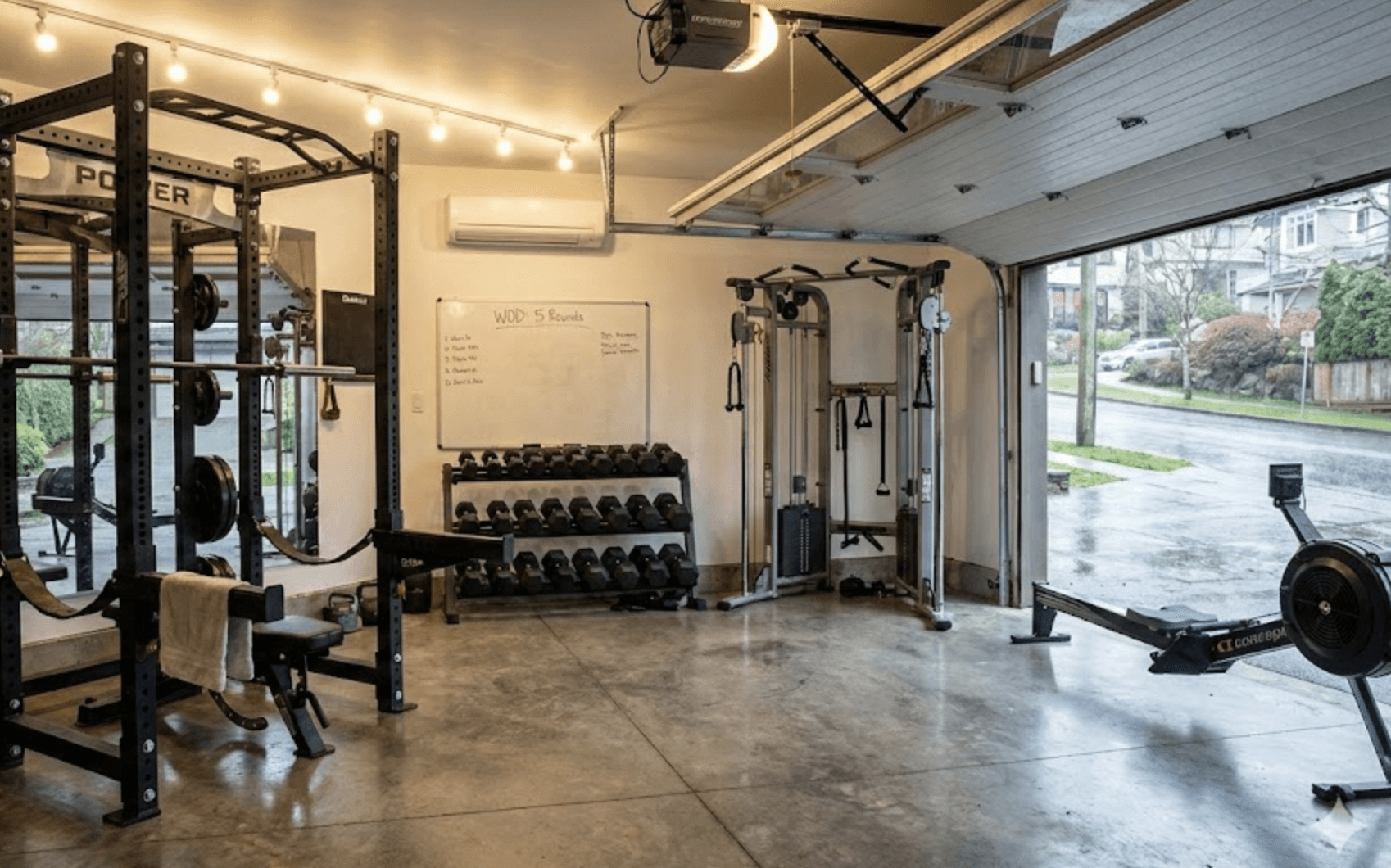
You step into your cluttered garage and envision something better—a professional training space where you never wait for equipment, never pay monthly fees, and never compromise your workout schedule. Vancouver homeowners face unique challenges when creating home gyms: our climate demands proper ventilation, our property values justify premium investments, and our busy lifestyles require convenient fitness solutions.
The good news? A professionally designed garage gym solves these challenges while adding lasting value to your home. If you are still exploring your options, start with our complete guide to home gym design ideas. After completing over 100 garage gym projects across Vancouver, from $12,000 starter setups to $75,000 comprehensive training facilities, we've learned what transforms a cold garage into a space you'll actually want to train in every day.
This guide covers everything from space planning and equipment selection to professional installation and property value impact. Whether you're considering a DIY approach or professional installation, you'll discover how to create a garage gym that looks new after 10,000 reps and adds genuine value to your Vancouver home.
How Much Space Do You Need for a Garage Gym?
The amount of space your garage gym needs depends on your training style and equipment choices. Most functional home gyms require between 100 and 400 square feet, though we've created effective training spaces in areas as small as 64 square feet (PowerliftingTechnique, 2025).
Understanding space requirements starts with the fundamentals. A standard Olympic barbell measures 7 feet long and needs at least 8 feet of clear width for safe loading and unloading. Add the depth of a power rack (typically 4-6 feet) plus bench length (4-5 feet), and you're looking at a minimum footprint of 8 by 11 feet for basic barbell training (Two Rep Cave, 2016).
But space planning goes beyond simple measurements. It's about creating efficient movement patterns and maintaining safety zones around equipment.
Minimum Space Requirements by Training Style
Different training styles demand different spatial configurations. Here's what actually works:
Strength Training Setup:
Minimum: 10 x 10 feet (100 square feet)
Recommended: 10 x 18 feet (180 square feet)
Ideal: 12 x 20 feet (240 square feet)
CrossFit/Functional Fitness:
Minimum: 10 x 14 feet (140 square feet)
Recommended: 15 x 20 feet (300 square feet)
Ideal: 20 x 20 feet (400 square feet)
Cardio-Focused Setup:
Minimum: 8 x 10 feet (80 square feet)
Recommended: 10 x 12 feet (120 square feet)
Ideal: 12 x 15 feet (180 square feet)
The key is leaving buffer space. You need 3-4 feet of clearance around barbells for loading plates and safe bail-outs. Cardio equipment requires 2-3 feet behind treadmills and 3-4 feet around bikes and rowers for mounting and dismounting (Bells of Steel USA, 2025).
Single vs. Double Garage Configurations
Canadian garages offer specific opportunities and constraints. Let's examine real-world dimensions:
Single-Car Garage (Typical Canadian):
Standard size: 12 x 20 feet (240 square feet)
Usable gym space: 10 x 18 feet after wall clearance
Best for: Individual training, basic equipment setup
Limitation: Can't park vehicle with full gym setup
Double-Car Garage (Typical Canadian):
Standard size: 20 x 20 feet (400 square feet)
Usable gym space: 18 x 18 feet after wall clearance
Best for: Multiple users, comprehensive equipment
Advantage: Can maintain half for parking/storage
In Vancouver's older homes, garage dimensions vary significantly. Character homes often feature 11 x 19 feet single garages, while newer builds stretch to 12 x 24 feet. We measure every dimension during our initial consultation—ceiling height matters as much as floor space, especially for pull-ups and overhead pressing.
Professional Space Analysis and 3D Visualization
This is where professional design separates from DIY guesswork. Our spatial analysis process examines five critical factors most homeowners overlook:
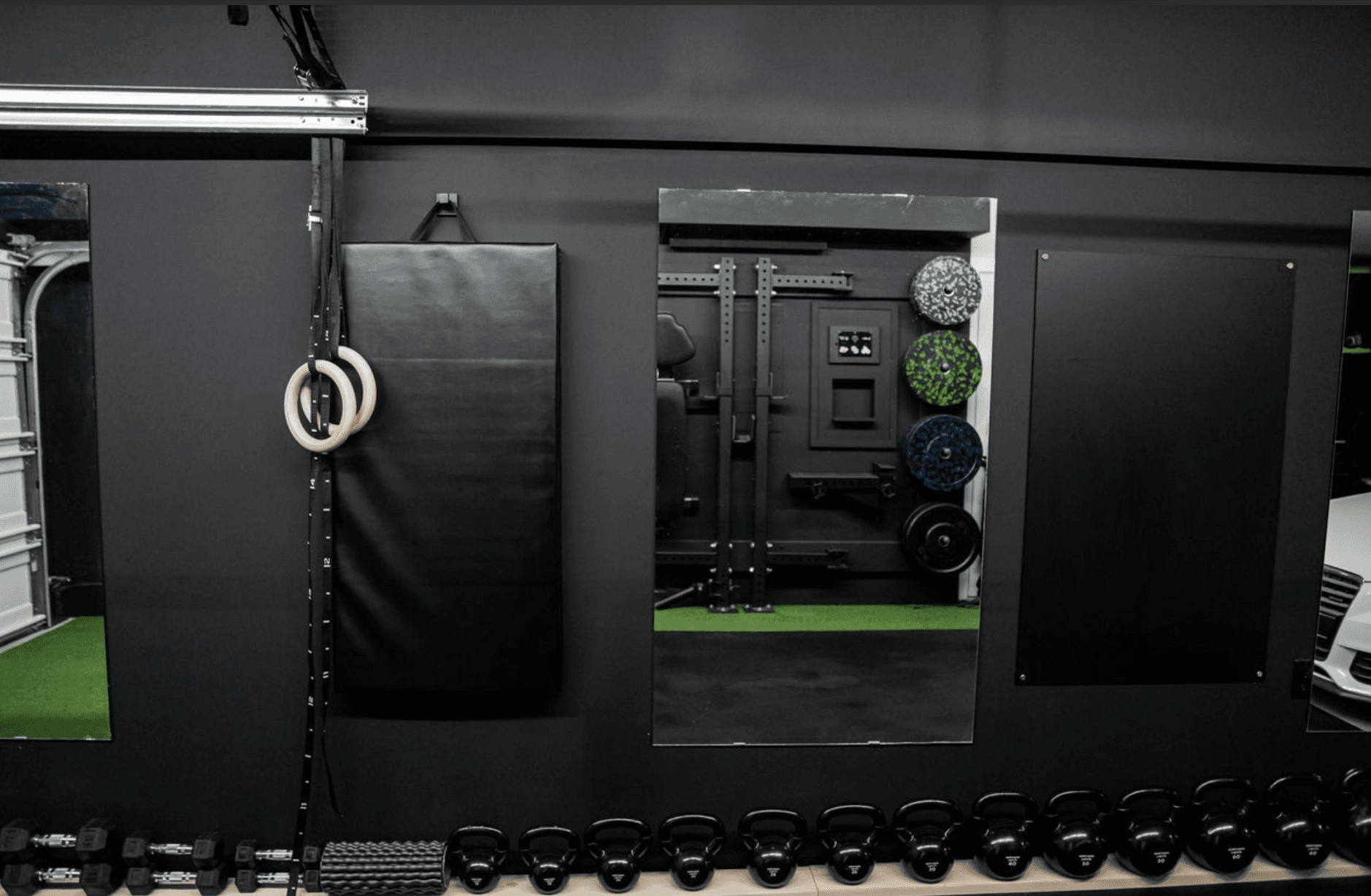
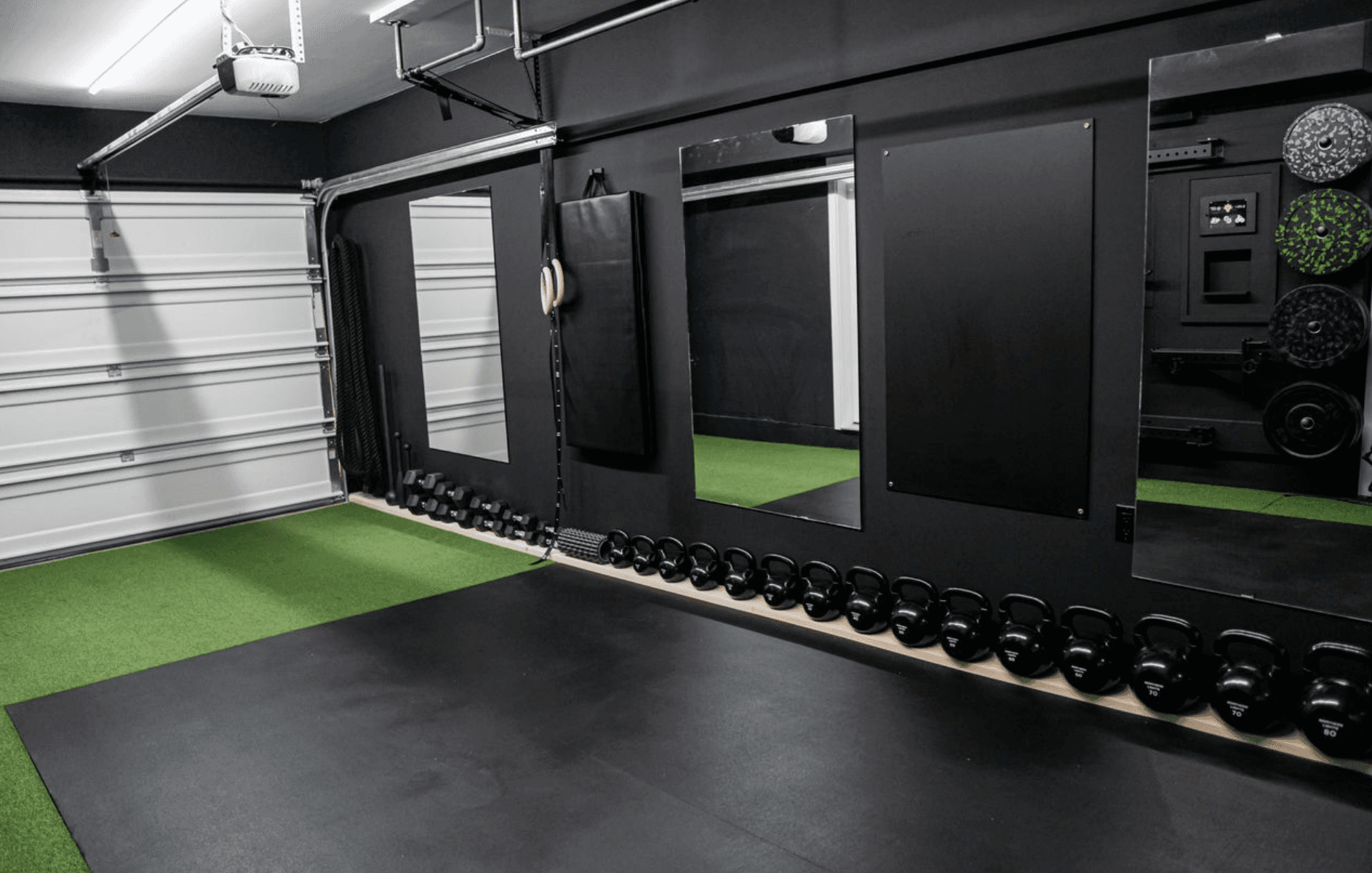
Sightlines and Mirrors: Strategic mirror placement creates depth perception and improves form checking. We position mirrors to avoid direct sunlight glare while maximizing visual space. Poor mirror placement is the number one complaint we fix in DIY setups.
Traffic Flow Patterns: Equipment arrangement should follow your workout progression. Warm-up area near the entrance, heavy lifting in stable zones, and cardio equipment where ventilation is optimal. We map movement patterns to prevent bottlenecks.
Ceiling Height Zones: Vancouver garages often have varied ceiling heights due to stairs or storage above. We map these zones for appropriate equipment placement—tall racks go where clearance allows, while low-profile equipment fits under constraints.
Load-Bearing Analysis: Not all garage floors are created equal. We identify where heavy equipment can safely sit and where reinforcement might be needed. A 500-pound loaded barbell dropped repeatedly requires proper support.
Future Expansion Planning: Your fitness journey evolves. Our 3D visualization shows not just your initial setup but how the space can grow. We design modular layouts that accommodate new equipment without complete reorganization.
Essential Equipment for Your Garage Gym
Equipment selection determines whether your garage gym becomes a daily destination or expensive storage. The difference between commercial-grade and consumer equipment isn't just marketing—it's measurable in years of reliable service.
Foundation Equipment Every Garage Gym Needs
Start with equipment that provides maximum training versatility. Here's the hierarchy of importance based on our 100+ installations:
Priority 1 - The Non-Negotiables:
Olympic Barbell ($300-$800)
Choose 28-29mm diameter for general use
Minimum 700-pound capacity
Stainless steel or cerakote for Vancouver humidity
Bumper Plates ($2-4 per pound)
Start with 230-260 pounds total
Mix bumper and iron for cost efficiency
Ensure uniform 450mm diameter
Power Rack or Squat Stand ($600-$3,000)
3x3" uprights minimum for stability
Westside hole spacing in bench zone
Must include safety bars/straps
Adjustable Bench ($200-$700)
700-pound minimum capacity
Multiple angle adjustments
Stable base with minimal wobble
Priority 2 - Versatility Additions:
Pull-up bar system (often integrated with rack)
Adjustable dumbbells or sets (5-50 pounds minimum)
Resistance band set with anchors
Plyo box (16/20/24" adjustable ideal)
Landmine attachment for rack
Priority 3 - Progressive Upgrades:
Cable system or functional trainer
Cardio equipment (rower, bike, or treadmill)
Specialty bars (trap bar, safety squat bar)
Additional weight plates as strength increases
Canadian Climate Considerations for Equipment
Vancouver's coastal climate creates unique equipment challenges that most online guides ignore. Here's what actually matters in our environment:
Humidity Management: Vancouver averages 70-80% humidity year-round. This accelerates rust on bare steel and degrades certain equipment faster. We specify stainless steel or properly coated equipment for longevity. Bare steel barbells, while feeling great, require weekly maintenance here.
Temperature Fluctuations: Garage temperatures swing from -5°C to 35°C seasonally. This affects:
Rubber durability (cheap bumpers crack in cold)
Electronic components (screens and motors)
Lubrication needs (cables and pulleys)
Material Selection for Longevity:
Choose urethane-coated plates over raw rubber
Specify sealed bearings in all rotating components
Select powder-coated frames over painted
Invest in stainless steel hardware throughout
We've replaced countless equipment pieces that couldn't handle Vancouver conditions. One client's consumer-grade rack developed rust holes within 18 months. The replacement commercial unit still looks new after five years.
Commercial-Grade vs. Consumer Equipment Lifespan
The numbers tell the story clearly. Commercial equipment lasts 7-12 years on average with proper maintenance, while consumer equipment typically fails within 2-5 years (YR Fitness, 2025). In home use with lower volume, commercial equipment can exceed 15 years of reliable service (Pro Gym Supply, 2023).
Real Lifespan Comparisons:
Equipment Type | Consumer Grade | Commercial Grade |
|---|---|---|
Treadmill | 3-5 years | 10-15 years |
Power Rack | 5-7 years | 20+ years |
Barbell | 2-4 years | Lifetime |
Dumbbells | 5-10 years | Lifetime |
Cable Machine | 3-5 years | 10-15 years |
What Makes Commercial Equipment Last:
Frame thickness: 11-gauge vs 14-gauge steel
Weld quality: Full continuous vs spot welding
Bearings: Sealed precision vs brass bushings
Cables: 2,000-pound rated vs 500-pound
Motors: Continuous duty vs peak rated
The price difference seems significant initially—a commercial power rack costs $1,500-$3,000 versus $400-$800 for consumer models. But divide that over 20 years versus 5 years, and commercial equipment costs less annually while providing superior safety and performance.
We source commercial equipment directly from manufacturers, passing wholesale pricing to clients without markup. This approach typically saves $2,000-$5,000 versus retail pricing on a complete gym setup.
Garage Gym Flooring Solutions
Flooring forms the foundation of your garage gym—literally and figuratively. The right flooring protects your concrete, reduces noise, provides stability, and creates the professional appearance that motivates training. For a full comparison of rubber, foam, vinyl, and turf options, see our guide on home gym flooring in Canada.
Rubber Mats, Horse Stall Mats, and Platforms
Not all rubber flooring is created equal. Here's what actually works in Vancouver garage gyms:
Horse Stall Mats:
Cost: $45-$65 per 4x6 foot mat
Thickness: 3/4 inch standard
Pros: Affordable, durable, readily available
Cons: Heavy (100 pounds), strong initial odor
Best for: Full coverage, budget-conscious builds
Commercial Gym Tiles:
Cost: $3-$6 per square foot
Thickness: 3/8 to 1 inch options
Pros: Interlocking, professional appearance
Cons: Higher cost, seams can separate
Best for: Premium installations, easy replacement
Rubber Rolls:
Cost: $2-$4 per square foot
Thickness: 1/4 to 1/2 inch typically
Pros: Seamless appearance, quick installation
Cons: Can shift without adhesive
Best for: Large open areas, cardio zones
Olympic Lifting Platforms:
Cost: $500-$1,500 built
Size: 8x8 feet standard
Components: Plywood base, rubber sides, wood center
Purpose: Protects floor from dropped weights
Requirement: Essential for Olympic lifting
Many DIY builders make the mistake of using puzzle-piece foam mats from big box stores. These compress under heavy loads and provide inadequate protection. We've repaired concrete damage from insufficient flooring—proper materials cost far less than foundation repair.
Professional Flooring Installation vs. DIY
DIY flooring installation seems straightforward until you encounter these common challenges:
DIY Pitfalls We Regularly Fix:
Uneven subfloor creating gaps and instability
Inadequate moisture barriers causing mold growth
Poor seaming leading to trip hazards
Incorrect material selection for load requirements
No transition planning to garage door threshold
Professional Installation Advantages:
Subfloor Preparation: We level concrete variations exceeding 1/4 inch, seal cracks that could telegraph through flooring, and apply moisture barriers where needed. This prevents the buckling and separation common in DIY installations.
Seamless Integration: Professional installation creates invisible seams using specialized adhesives and joining techniques. We plan every cut to minimize waste and ensure patterns align perfectly.
Load Distribution: Heavy equipment requires reinforced flooring zones. We install additional subflooring where racks and machines sit, preventing compression and indentation over time.
Drainage Consideration: Vancouver garages must maintain slight drainage slope. We install flooring that preserves this drainage while remaining level enough for safe training.
The cost difference? Professional installation adds $2-3 per square foot but prevents the $1,000-$3,000 replacement cost when DIY flooring fails prematurely. See our flooring guide for a full cost comparison by material type.
Acoustic Considerations for Garage Gyms
Noise management is crucial in Vancouver's dense neighbourhoods. Dropped weights and early morning workouts can strain neighbour relationships and even violate noise bylaws.
Sound Transmission Basics:
Impact noise travels through structure
Airborne noise escapes through gaps
Low frequencies penetrate most materials
Concrete transmits sound efficiently
Noise Reduction Solutions:
Floor-Based Dampening: Double-layer flooring systems reduce impact noise by 50-70%. We install:
Base layer: 1/2" rubber underlayment
Top layer: 3/4" horse stall mats or tiles
Platform areas: Additional plywood isolation
Wall Treatment: Shared walls with living spaces need extra attention:
Mass-loaded vinyl barriers reduce transmission
Acoustic panels absorb reflected sound
Strategic equipment placement away from shared walls
Equipment Selection for Noise:
Urethane plates versus rubber (quieter drops)
Friction-based resistance over weight stacks
Belt-drive versus chain-drive machines
Proper equipment maintenance reduces mechanical noise
We measure decibel levels during installation to ensure compliance with Vancouver's 55 dBA residential limit during daytime hours.
Climate Control for Canadian Garage Gyms
Vancouver's mild but humid climate creates specific challenges for garage gyms. Without proper climate control, your space becomes unusable in summer heat and winter cold while equipment degrades from moisture exposure.
Insulation Requirements and R-Values
Canadian building standards recommend R20 insulation for garage walls to achieve energy efficiency (Insulation Cambridge, 2024). But insulation serves beyond temperature—it controls moisture, reduces sound transmission, and protects equipment.
Insulation Investment Breakdown:
Uninsulated garage: $150-$250/month heating in winter
R20 insulated garage: $40-$80/month heating
Payback period: 18-24 months
Government grants available: Up to $1,800 (Natural Resources Canada, 2024)
Critical Insulation Zones:
Ceiling/Attic (R30-R40 recommended): Heat rises, making ceiling insulation your first priority. Blown-in insulation costs $1-$2 per square foot and provides immediate comfort improvement.
Exterior Walls (R20 minimum): Spray foam provides superior air sealing but costs more ($3-$5 per square foot). Batt insulation offers good value at $0.80-$1.50 per square foot installed (HomeGuide, 2023).
Garage Door (Often overlooked): Insulated garage doors or retrofit kits ($200-$500) prevent the largest heat loss area. This single upgrade can reduce heating costs by 30%.
Foundation Walls: Below-grade walls need moisture-resistant insulation. Rigid foam boards prevent condensation that leads to mold and equipment corrosion.
Heating and Cooling Solutions
Year-round comfort requires both heating and cooling strategies tailored to Vancouver's climate:
Heating Options Comparison:
Type | Installation Cost | Operating Cost | Pros | Cons |
|---|---|---|---|---|
Electric Baseboard | $200-$500 | High ($100-$200/mo) | Simple installation | Expensive operation |
Gas Heater | $1,500-$3,000 | Low ($30-$60/mo) | Efficient heating | Requires gas line |
Mini-Split Heat Pump | $2,000-$4,000 | Moderate ($40-$80/mo) | Heating and cooling | Higher upfront cost |
Infrared Panels | $500-$1,000 | Moderate ($50-$100/mo) | Direct heating | Limited coverage |
Cooling Strategies:
Cross-ventilation with windows/vents
Ceiling fans for air circulation
Portable AC units ($400-$800)
Mini-split systems (best long-term solution)
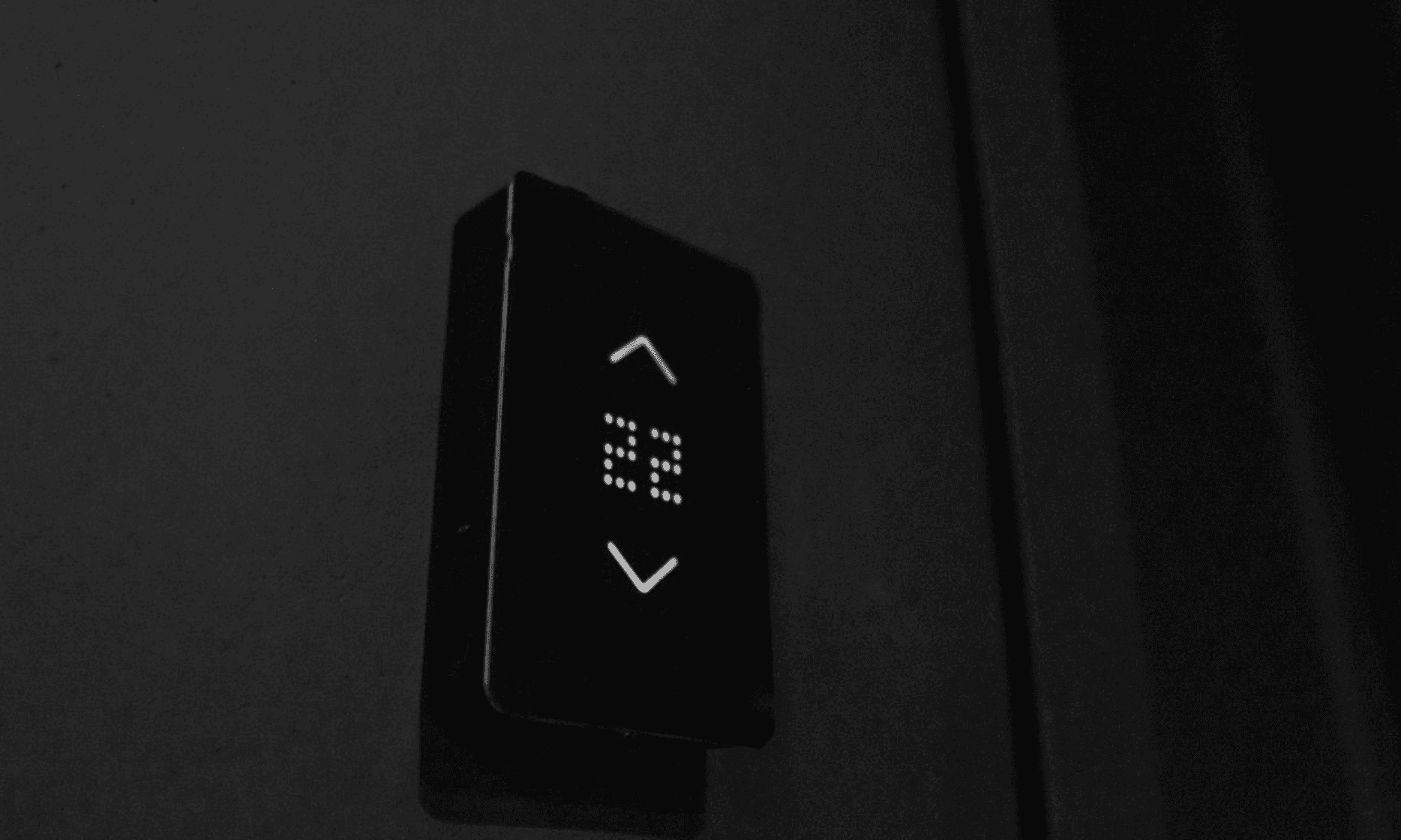
Smart Climate Integration: Modern thermostats allow pre-heating before workouts and setback temperatures when unused. This reduces energy costs by 30-40% while maintaining equipment protection temperatures.
Humidity and Ventilation Management
Vancouver's average 70-80% humidity accelerates rust, promotes mold, and makes training uncomfortable. Proper ventilation is non-negotiable for equipment longevity and air quality.
Moisture Sources in Garage Gyms:
External humidity infiltration
Concrete moisture wicking
Human perspiration during workouts
Wet vehicles or equipment
Ventilation Solutions:
Passive Ventilation: Install soffit vents low and ridge vents high to create natural convection. This costs $500-$1,000 but requires no operating expense. Add screened vents to prevent pest infiltration.
Active Ventilation: Exhaust fans ($200-$500) remove humid air actively. Timer controls ensure operation during and after workouts when moisture peaks. CFM rating should exchange air 6-8 times hourly.
Dehumidification: Standalone dehumidifiers ($300-$600) maintain 40-50% relative humidity. This prevents rust on equipment and mold growth on surfaces. Units with automatic drainage eliminate daily emptying.
Moisture Monitoring: Digital hygrometers ($20-$50) track humidity levels. We install these during every project to ensure ventilation effectiveness. Alert features notify when humidity exceeds safe levels.
Our climate control installations typically add $2,000-$5,000 to project costs but prevent the $10,000+ equipment replacement from moisture damage we've seen in uncontrolled spaces.
Storage and Organization Systems
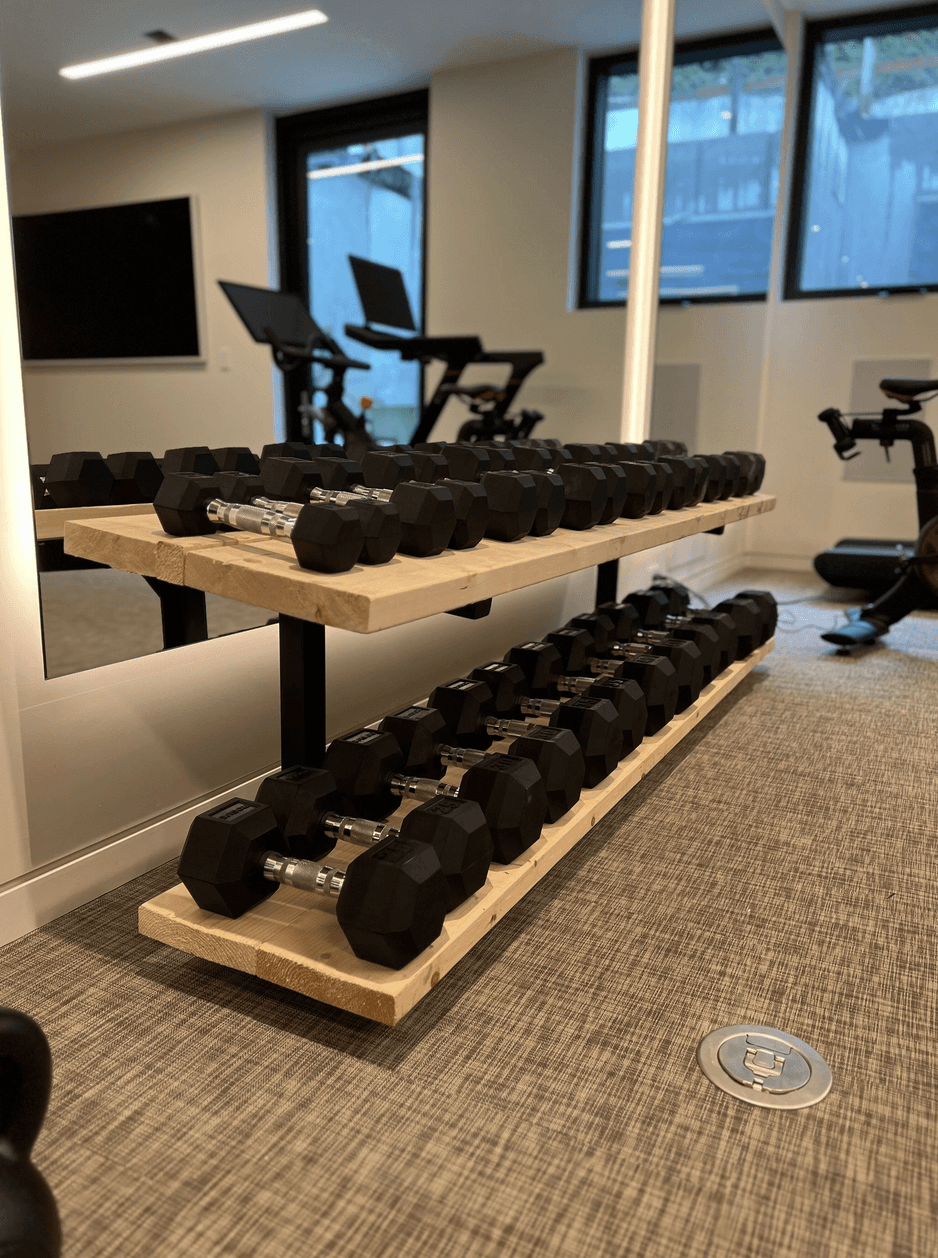
Efficient storage transforms cluttered garages into functional training spaces. The difference between amateur and professional gyms often comes down to organization systems that keep equipment accessible yet out of the way.
Wall-Mounted Storage Solutions
Vertical storage maximizes floor space while keeping equipment organized and visible. Here's what works:
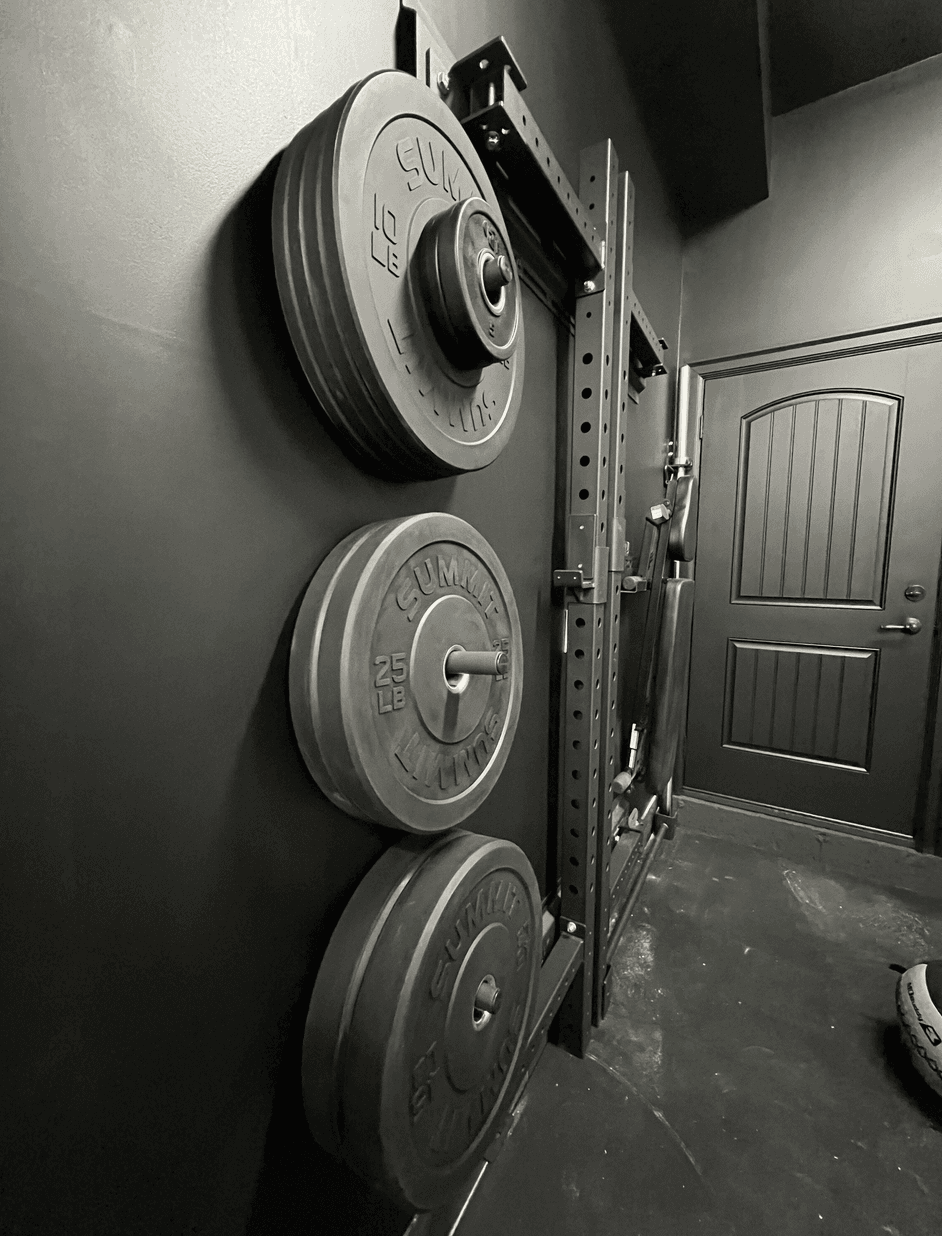
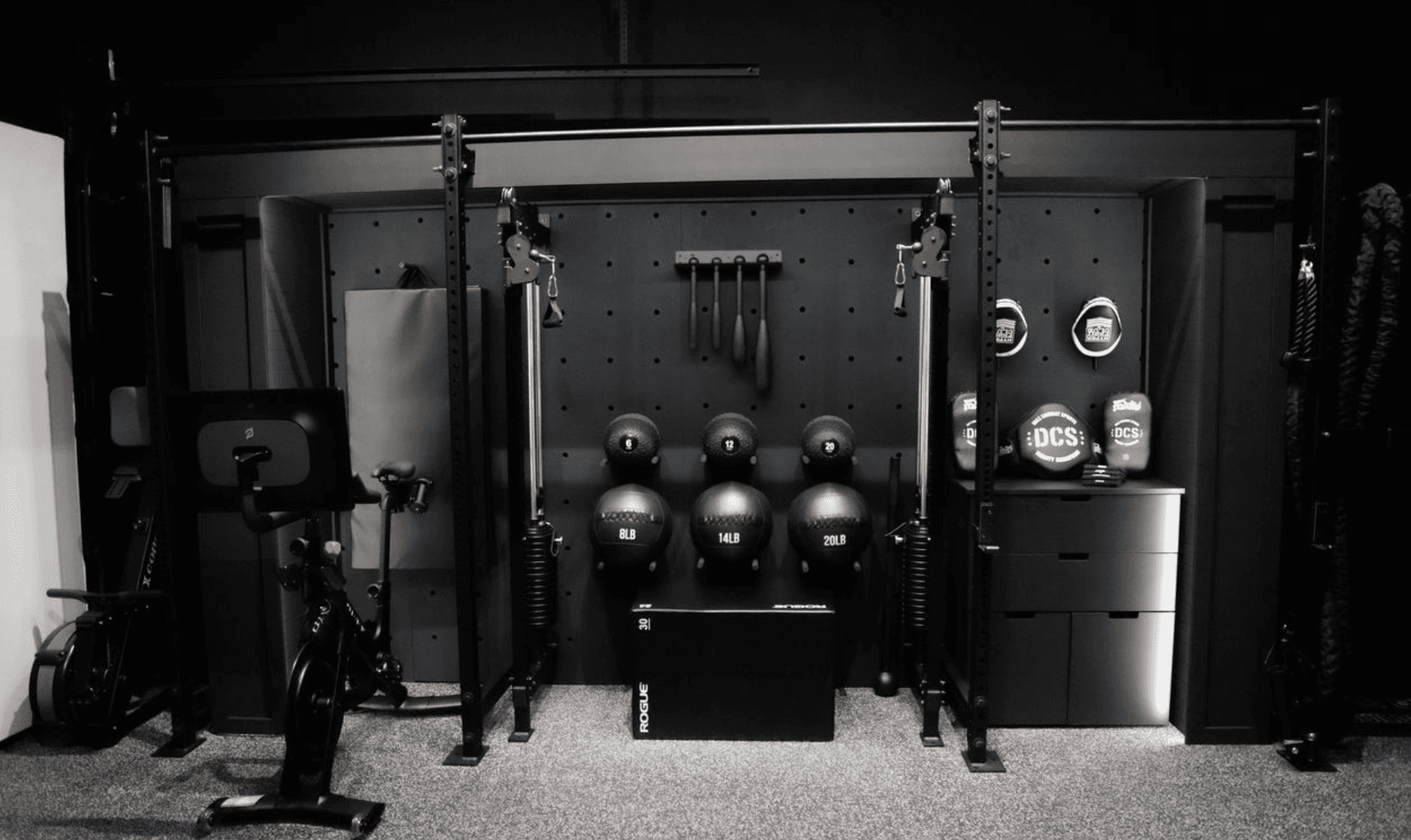
Weight Plate Storage:
Wall-mounted pegs: $100-$300 per rack
Holds 300-500 pounds per unit
Install into studs with 3/8" lag bolts
Position at hip height for easy loading
Barbell Storage Systems:
Vertical holders: $150-$400 (9-bar capacity)
Horizontal gun racks: $100-$250 (3-6 bars)
Space bars 6-8 inches apart
Mount at shoulder height for accessibility
Accessory Organization:
Slatwall systems: $10-$15 per square foot
Holds bands, belts, chains, attachments
Reconfigurable as needs change
Professional appearance
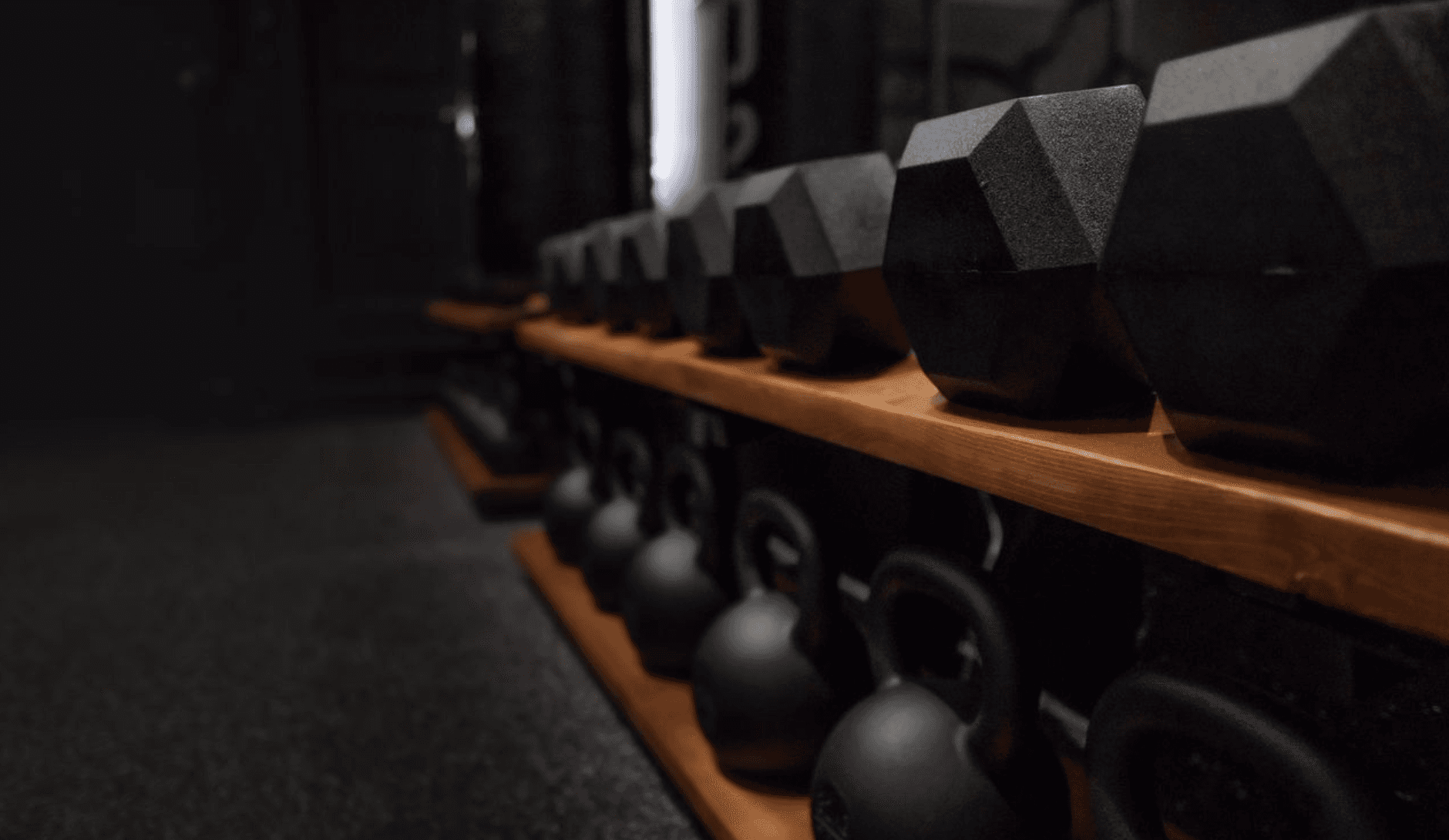
Medicine Ball/Kettlebell Shelving:
Heavy-duty brackets: $50-$150 per shelf
16-inch depth minimum
300-pound capacity required
Ladder spacing for different sizes
Professional installation ensures proper stud attachment and weight distribution. DIY storage failures have caused thousands in equipment damage and personal injury.
Multi-Purpose Space Management
Half-garage gyms require creative solutions to maintain functionality for both training and storage:
Modular Design Principles:
Foldable Equipment: Wall-mounted racks that fold flat save 4 feet of depth when not in use. These cost $800-$2,000 but preserve parking space. Quality units maintain full functionality when deployed.
Mobile Storage Carts: Rolling weight trees and dumbbell racks ($200-$500) move aside for vehicle access. Industrial casters support 500+ pounds while protecting flooring. Lock mechanisms prevent movement during workouts.
Ceiling Storage Systems: Overhead platforms ($300-$800) store seasonal equipment above vehicle height. Pulley systems make access easy without ladders. Maximum 200 pounds ensures safety.
Retractable Solutions: Ceiling-mounted cable systems and TRX anchors disappear when unused. Pull-up bars that telescope into ceiling joists save headroom. These solutions cost more initially but preserve space flexibility.
Seasonal Equipment Rotation Strategies
Vancouver's mild climate enables year-round outdoor training, creating opportunities for equipment rotation:
Summer/Outdoor Season: Move sleds, battle ropes, and portable equipment outside. This frees indoor space for additional equipment or improved movement areas. Store winter-specific gear overhead.
Winter/Indoor Season: Bring weather-sensitive equipment inside. Create dedicated stretching and warm-up zones. Position cardio equipment for entertainment viewing during longer indoor sessions.
Rotation Schedule Benefits:
Prevents equipment stagnation
Refreshes training environment
Extends equipment lifespan
Maintains training variety
We design storage systems with seasonal rotation in mind, including labeled zones and quick-release mounting systems that make transitions effortless.
Budget Considerations for Garage Gyms
Investment in a garage gym ranges from basic DIY setups under $1,000 to professional installations exceeding $75,000. Understanding the cost-benefit at each level helps make informed decisions. Our full breakdown of home gym costs in Canada covers every hidden expense you need to plan for.
DIY Budget Range ($500-$2,000)
The DIY approach appeals to budget-conscious homeowners willing to invest time over money. Here's realistic cost breakdown:
$500 Budget (Bare Minimum):
Used Olympic barbell: $100-$150
230 pounds mixed plates: $150-$200
DIY squat stands: $75-$100
Horse stall mats (4): $200
Bench (used): $50-$75
$1,000 Budget (Functional Setup):
New budget barbell: $200-$250
300 pounds plates: $300-$400
Basic power rack: $300-$400
Adjustable bench: $150-$200
Flooring (200 sq ft): $250-$300
$2,000 Budget (Solid Foundation):
Quality barbell: $300-$400
400 pounds bumper/iron mix: $500-$600
Mid-range power rack: $600-$800
Good adjustable bench: $250-$350
Full flooring: $400-$500
Basic accessories: $200-$300
DIY Money-Saving Strategies:
Facebook Marketplace and Craigslist for used equipment
End-of-year sales (November-January)
Building platforms and storage yourself
Buying plates in bulk from closing gyms
Starting minimal and building over time
The average cost for basic home gym equipment is $1,000 to $2,000 (Garage Gym Reviews, 2019), though quality and longevity vary significantly at this price point.
Professional Installation Investment ($12,000-$75,000)
Professional installation through companies like Home Gym Builds creates comprehensive training facilities with lasting value:
$12,000-$20,000 (Starter Professional):
Commercial-grade power rack system
Full bumper plate set (400+ pounds)
Professional barbell selection
Complete flooring installation
Wall-mounted storage systems
Basic climate control
Professional design and installation
$20,000-$35,000 (Typical Professional):
Multi-station equipment setup
Cable system or functional trainer
Cardio equipment selection
Premium flooring with platforms
Mirror installation
HVAC integration
Lighting upgrade
Complete storage solutions
3D design and project management
$35,000-$75,000 (Premium Professional):
Top-tier equipment from commercial brands
Multiple training stations
Full cardio suite
Smart equipment integration
Complete HVAC system
Professional lighting design
Audio/visual installation
Custom storage solutions
Architectural modifications
Premium finishes throughout
Professional Installation Advantages:
Single point of accountability
Wholesale equipment pricing
Certified trades coordination
Permit handling
Warranty protection
3D visualization before construction
6-7 week typical completion
Cost-Benefit Analysis vs. Gym Memberships
The financial case for home gyms becomes clear when analyzing long-term costs:
Vancouver Gym Membership Costs:
Budget gym: $30-$50/month ($360-$600/year)
Mid-range gym: $60-$100/month ($720-$1,200/year)
Premium gym: $150-$300/month ($1,800-$3,600/year)
Personal training: $80-$150/session
Family Membership Multiplication: Two adults at mid-range gym: $1,440-$2,400/year Add teen children: $2,160-$3,600/year Plus gas, time, and inconvenience costs
5-Year Cost Comparison:
Option | Initial Cost | 5-Year Total | Cost per Workout* |
|---|---|---|---|
Budget Gym (1 person) | $0 | $3,000 | $5.77 |
Mid-Range Gym (2 people) | $0 | $10,000 | $9.62 |
DIY Home Gym | $2,000 | $2,500** | $2.40 |
Professional Install | $25,000 | $26,000** | $25.00 > $2.50*** |
*Based on 3 workouts/week **Includes equipment additions and maintenance ***Drops to $2.50 after year 2
Hidden Value Factors:
No commute time (30-60 minutes saved daily)
Train during off-hours without facility limits
No waiting for equipment
Family members train free forever
Property value increase up to 44% (Property Investor Today, 2024)
Equipment resale value (50-70% for commercial grade)
Professional Design Principles for Garage Gyms
The difference between a garage with gym equipment and a professional training facility lies in design principles. These concepts, standard in our 100+ projects, rarely appear in DIY planning.
Sightlines and Spatial Flow
Professional gyms feel different because movement patterns make sense. Equipment placement follows training progression, creating efficient workflows that enhance rather than interrupt training.
Primary Sightline Considerations:
Entry Perspective: Your first view sets training mindset. We position motivational elements—impressive equipment, mirrors, achievements—in the primary sightline. Clutter and disorganization never appear in initial view.
Mirror Strategic Placement: Mirrors serve beyond vanity. Proper positioning:
Enables form checking from multiple angles
Creates depth perception in small spaces
Reflects natural light to brighten space
Avoids glare from windows or lights
Never directly faces garage door (privacy)
Equipment Hierarchy: Most-used equipment gets premium positioning. Specialty items occupy perimeter. This reduces movement congestion and equipment shuffling during workouts.
Natural Movement Patterns:
We map typical workout flows:
Entry > Storage for personal items
Warm-up zone with open floor space
Primary lifting area with rack/platform
Accessory work stations
Cool-down/stretching zone
Exit path clear of equipment
This intuitive flow eliminates wasted movement and maintains training momentum.
Lighting Design for Performance
Lighting affects training quality more than most realize. Poor lighting causes eye strain, reduces motivation, and increases injury risk from missed visual cues.
Three-Layer Lighting Approach:
Ambient Base Layer: LED panel lights (4000-5000K) provide even, shadow-free illumination. We install 40-50 lumens per square foot—double typical garage lighting. Cost: $500-$1,000 for complete coverage.
Task Lighting: Focused lights above specific stations:
Rack/platform areas: 75+ lumens per square foot
Mirror zones: Side lighting eliminates shadows
Cardio areas: Adjustable for screen visibility
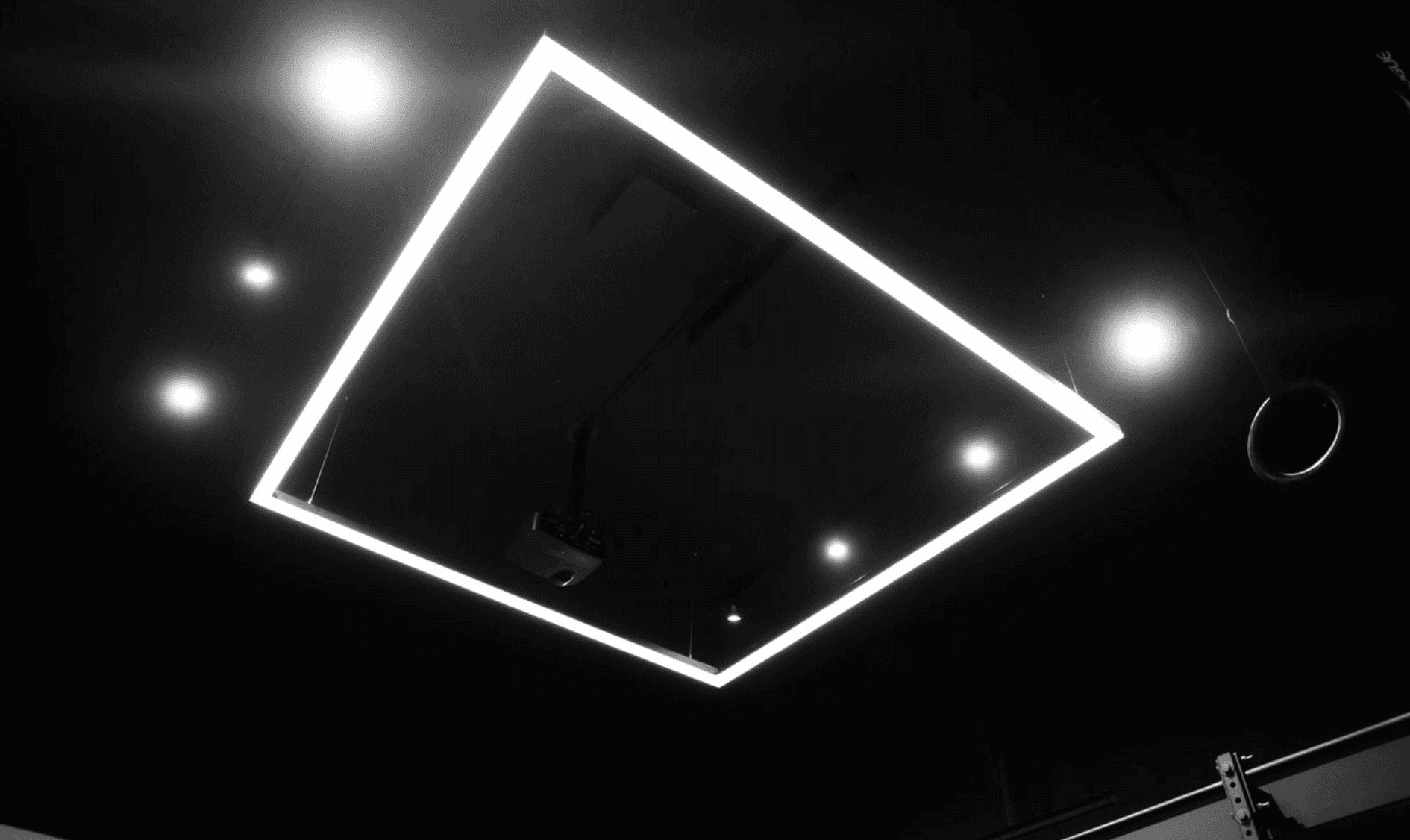
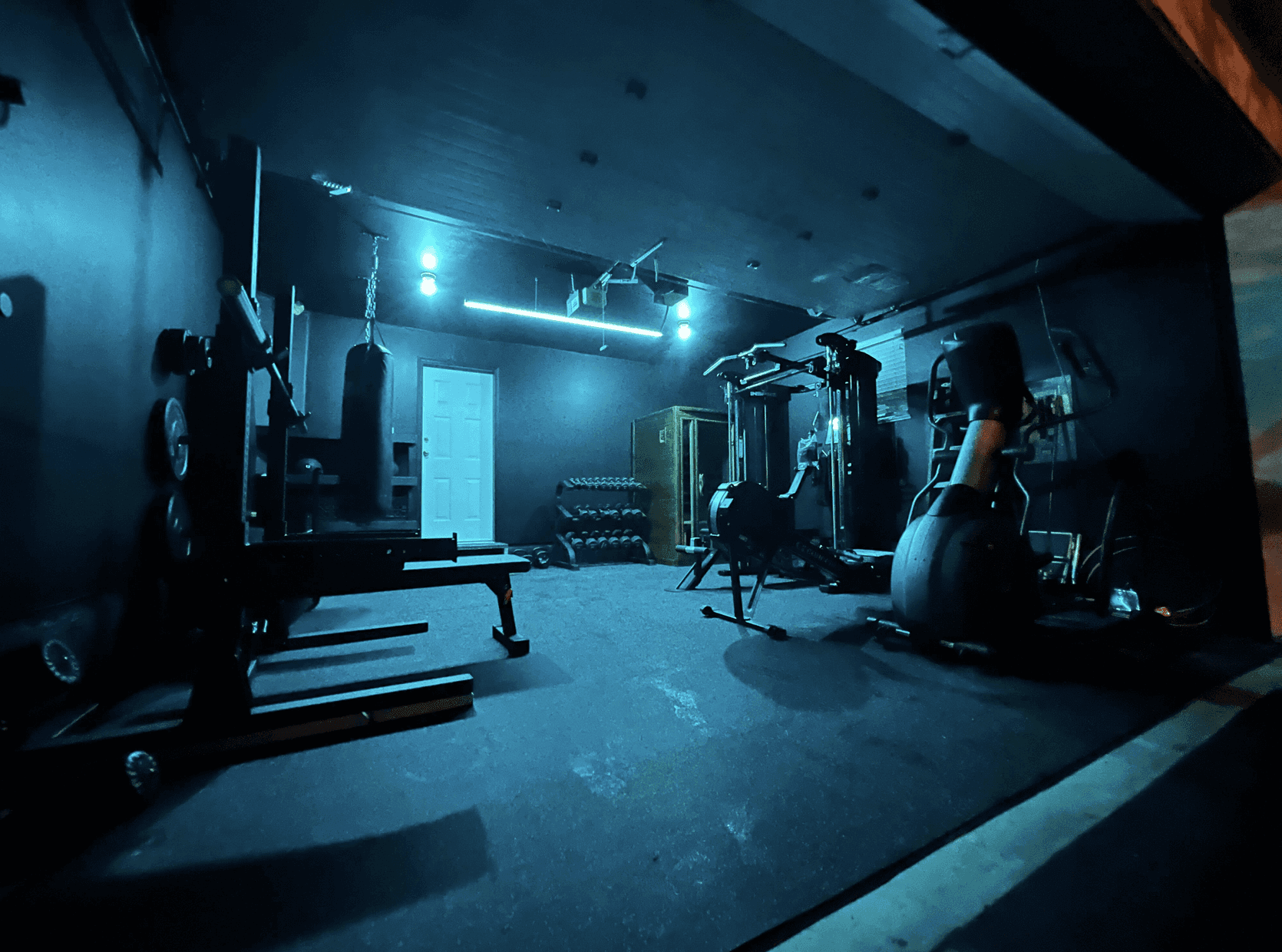
Accent Lighting: Coloured LED strips create energy and atmosphere. Programmable systems shift from energizing cool light for morning sessions to warmer tones for evening training. Smart integration allows voice or app control.
Natural Light Optimization: Windows provide motivation and energy—when positioned correctly. We avoid direct sunlight on equipment (causes glare and heating) while maximizing indirect natural light. Frosted film maintains privacy without sacrificing illumination.
Material Harmony and Aesthetic Cohesion
Professional design creates spaces you want to inhabit. This isn't about luxury—it's about creating environments that motivate consistent training.
Colour Psychology in Training Spaces:
Wall Colours:
Neutral grays: Professional, focuses attention on training
White/light: Maximizes brightness and space perception
Accent walls: One bold colour adds energy without overwhelming
Equipment Coordination: Matching equipment colours creates visual calm. Mixed brands and colours create chaos. We specify equipment in complementary finishes—typically black, gray, or silver throughout.
Flooring Consistency: Uniform flooring colour and texture throughout prevents visual fragmentation. Transition strips between flooring types maintain clean lines. Platform wood stains coordinate with overall palette.
Material Quality Signals:
Professional spaces use materials that communicate permanence:
Sealed concrete over raw
Finished drywall over exposed studs
Powder-coated steel over painted
Commercial rubber over foam tiles
These choices cost marginally more but transform perception from "garage project" to "professional facility."
Building Codes and Permits in Vancouver
Legal compliance protects your investment and ensures safety. Vancouver's specific requirements often surprise homeowners planning garage gyms.
Electrical and Structural Modifications
Most garage gyms require electrical upgrades that trigger permit requirements:
Electrical Permit Triggers:
Adding new circuits (usually required)
Installing 240V outlets for equipment
Upgrading panel capacity
Adding dedicated lighting circuits
Installing heating/cooling systems
Typical Electrical Upgrades:
2-4 new 20-amp circuits: $800-$1,500
Dedicated equipment circuits: $400-$600 each
Panel upgrade (if needed): $2,000-$3,500
Permit and inspection: $200-$400
Structural Modifications:
Permit Required:
Removing/modifying walls
Adding windows or doors
Reinforcing floors for heavy equipment
Building platforms attached to structure
Ceiling modifications for mounting
Permit Not Required:
Free-standing equipment placement
Removable flooring installation
Painting and cosmetic updates
Portable storage solutions
Professional contractors handle permit applications, ensuring compliance and avoiding costly corrections. DIY permit violations can void insurance and complicate home sales.
Insurance Considerations for Home Gyms
Home gyms impact insurance in ways many homeowners don't anticipate:
Coverage Implications:
Equipment Coverage: Standard policies limit coverage for "business equipment" to $2,500. Gym equipment often falls into this category. Additional scheduling may be required for valuable equipment. Document everything with photos and receipts.
Liability Concerns: If others use your gym—even friends—liability increases. Injuries could trigger lawsuits exceeding standard coverage. Umbrella policies ($1-2 million) cost $200-$400 annually for protection.
Required Disclosures: Insurance companies may require notification of:
Electrical modifications
Structural changes
Equipment exceeding certain values
Any commercial use (training others)
Risk Mitigation:
Professional installation provides documentation that reduces liability:
Certified electrical work
Permitted modifications
Equipment meeting safety standards
Proper ventilation and climate control
We provide complete documentation packages for insurance purposes, including equipment specifications, installation certifications, and safety compliance records.
Smart Home Integration for Modern Garage Gyms
Technology transforms garage gyms from isolated spaces into connected training environments. Smart integration, while not essential, adds convenience and motivation that improves consistency.
Connected Equipment and Apps
Modern equipment offers connectivity that enhances training:
Smart Equipment Categories:
Connected Cardio:
Treadmills with streaming classes
Bikes with virtual routes
Rowers with online competitions
Real-time performance tracking
Automatic workout logging
Smart Strength Equipment:
Digital weight stacks with tracking
Barbell velocity trackers
Rep counting systems
Form analysis cameras
Progressive overload apps
Integration Platforms:
Apple Health/Google Fit synchronization
Strava for cardio tracking
MyFitnessPal for comprehensive logs
Training-specific apps (Strong, JEFIT)
Connectivity Infrastructure:
Reliable WiFi is essential. We install:
Dedicated mesh network nodes
Ethernet for streaming equipment
USB charging stations
Tablet/phone mounting systems
Automated Climate and Lighting Control
Smart automation creates optimal training environments automatically:
Climate Automation:
Pre-heating before morning workouts
Automatic ventilation during training
Humidity monitoring and control
Energy-saving setback schedules
Lighting Scenes:
"Morning Energy" bright cool lighting
"Evening Training" moderate warm light
"Max Intensity" full brightness
"Recovery" dim relaxation mode
Integration Options:
Voice control (Alexa, Google Home)
Smartphone apps for remote control
Motion sensors for automatic activation
Schedule-based automation
Music and Entertainment:
Dedicated sound systems
Smart TV integration
Streaming service access
Wireless headphone systems
Smart integration typically adds $1,000-$3,000 to projects but significantly enhances the training experience.
Property Value Impact of Professional Garage Gyms
Home improvements generate varying returns on investment. Professional garage gyms, when executed properly, provide both lifestyle and financial benefits that justify the investment.
ROI of Professional vs. DIY Installation
The numbers tell a compelling story about professional installation value:
Property Value Increases:
Research indicates home gyms can add up to 44% to property value in certain markets (Property Investor Today, 2024). While this represents optimal scenarios, realistic expectations in Vancouver include:
Professional installation: 60-80% cost recovery
DIY installation: 30-50% cost recovery
Difference stems from quality, permits, and versatility
Why Professional Installation Adds More Value:
Permitted Work: Buyers trust documented, permitted improvements. Professional installation provides paper trails that DIY lacks. This reduces buyer inspection concerns and mortgage complications.
Quality Perception: Professional finishes signal quality throughout the property. Buyers assume professional gym installation indicates similar care elsewhere. This "halo effect" influences entire property perception.
Versatility Assurance: Professional designs accommodate multiple uses. Buyers see potential for:
Continued gym use
Home office conversion
Entertainment space
Workshop transformation
Storage optimization
Longevity Confidence: Commercial equipment and professional installation suggest durability. Buyers factor replacement costs—professional gyms require less future investment.
Creating Multi-Purpose Resale Value
Smart design ensures your gym adds value regardless of buyer fitness interest:
Conversion-Ready Features:
Modular Systems: Equipment that removes cleanly without damage preserves flexibility. Wall-mounted systems with proper backing allow easy removal. Flooring that works for multiple purposes adds versatility.
Infrastructure Value: Upgraded electrical serves any use. Climate control benefits any activity. Improved lighting enhances any purpose. These improvements add value beyond gym use.
Aesthetic Neutrality: Professional design avoids over-personalization:
Neutral colour palettes work for any use
Quality materials suit multiple purposes
Clean lines adapt to changing needs
Minimalist approach maximizes flexibility
Documentation Package:
We provide comprehensive packages for resale:
Equipment specifications and warranties
Installation permits and inspections
Maintenance records and schedules
Conversion possibility examples
Professional photography for listings
This documentation helps real estate agents market the space effectively and justifies premium pricing.
Common Garage Gym Mistakes to Avoid
After fixing dozens of DIY attempts and learning from 100+ installations, we've identified critical mistakes that derail garage gym projects:
Underestimating Electrical Requirements
The most expensive mistake is inadequate electrical planning:
Common Electrical Failures:
Overloaded Circuits: Plugging treadmills into basic outlets trips breakers. Most garage circuits are 15-amp shared with other loads. Treadmills need dedicated 20-amp circuits. Adding multiple devices compounds problems.
Insufficient Capacity: Existing panels lack space for new circuits. Upgrade costs ($2,000-$3,500) shock unprepared homeowners. Planning identifies this early, avoiding mid-project surprises.
Extension Cord Dependence: Temporary becomes permanent, creating fire hazards. Insurance may deny claims from extension cord fires. Proper outlet placement eliminates cord needs.
No GFCI Protection: Code requires GFCI in garages for safety. Older garages lack this protection. Retrofit costs are minimal versus electrocution risk.
Ignoring Moisture and Ventilation
Vancouver's humidity destroys inadequately protected gyms:
Moisture Damage Progression:
Month 1-3: Surface rust appears on equipment. Musty odours develop. Condensation forms on windows.
Month 4-6: Rust penetrates equipment joints. Mold appears on organic materials. Flooring edges curl or separate.
Month 7-12: Equipment failures begin. Structural rust compromises safety. Mold requires professional remediation.
Prevention Costs vs. Remediation:
Proper ventilation installation: $500-$1,500
Dehumidification system: $300-$600
Moisture barriers: $200-$400
Total prevention: $1,000-$2,500
Compare to:
Mold remediation: $2,000-$6,000
Equipment replacement: $5,000-$15,000
Health impacts: Immeasurable
Choosing Equipment Before Space Planning
The excitement of equipment deals causes poor decisions:
Equipment-First Problems:
Size Mismatches: That amazing power rack deal doesn't fit. Ceiling height prevents pull-ups. Door width blocks equipment entry. Return shipping costs hundreds.
Flow Disruption: Equipment placement follows purchase order, not workout logic. Traffic patterns require constant equipment moving. Inefficiency reduces training consistency.
Overbuying Initially: Filling space immediately limits future options. Evolution requires flexibility. Starting minimal allows organic growth. Professional planning stages equipment acquisition.
The Right Process:
Measure every dimension accurately
Plan traffic flow and workout patterns
Create scaled layout (paper or digital)
Select equipment fitting the plan
Stage purchases over time
Summary/Key Takeaways
Creating a professional garage gym in Vancouver requires thoughtful planning, quality equipment selection, and attention to our unique climate challenges. Here are the essential insights from our 100+ garage gym installations:
Professional design creates lasting value - Spatial analysis, 3D visualization, and proper planning prevent costly mistakes while ensuring your gym functions optimally for decades
Vancouver's climate demands specific solutions - R20 insulation, humidity control, and corrosion-resistant equipment are non-negotiable for equipment longevity and comfortable training
Commercial equipment justifies the investment - With 15+ year lifespans versus 2-5 years for consumer grade, commercial equipment costs less annually while providing superior safety
Professional installation protects property value - Permitted work, quality finishes, and versatile design can add up to 44% to property value versus 30-50% for DIY approaches
Budget ranges serve different needs - From $500 DIY setups to $75,000 professional installations, success depends on matching investment to goals and long-term value expectations
Frequently Asked Questions
How long does it take to build a professional garage gym?
A professional garage gym installation typically takes 6-7 weeks from initial design to final completion. This timeline includes spatial analysis and 3D visualization (week 1-2), equipment sourcing and ordering (week 2-3), construction preparation and permitting (week 3-4), and installation including flooring, electrical, and equipment setup (week 4-7).
DIY projects often stretch 3-6 months due to evening and weekend work schedules, learning curves, and equipment availability delays.
Can I still park my car with a garage gym?
Yes, with proper planning. Half-garage setups dedicate one side to training while preserving parking. Fold-away racks mount to walls and extend only during use. Mobile equipment on wheels rolls aside for vehicle access.
Professional design maximizes dual use through strategic equipment placement and modular storage systems. Many clients maintain full parking capability with complete gyms.
Do I need permits for a garage gym in Vancouver?
Permits are required for electrical modifications (new circuits, panel upgrades), structural changes (wall modifications, reinforcements), and permanent installations (built-in platforms, attached storage). Permits are not required for free-standing equipment, removable flooring, or cosmetic improvements.
Professional contractors handle permit applications, ensuring code compliance. DIY permit violations can void insurance and complicate home sales. Budget $200-$400 for typical permit costs.
What's the difference between commercial and residential equipment?
Commercial equipment uses heavier gauge steel (11-gauge vs 14-gauge), superior welds (continuous vs spot), sealed bearings (vs brass bushings), and higher-rated components (2,000-pound cables vs 500-pound). This translates to 7-12 year average lifespans versus 2-5 years for residential equipment (YR Fitness, 2025).
The price premium (50-100% more) is offset by longevity, safety, and warranty coverage. Commercial equipment often costs less per year of service than residential.
How do I maintain equipment in Vancouver's climate?
Vancouver's 70-80% average humidity requires proactive maintenance. Weekly tasks include wiping equipment with microfiber cloths, checking for rust development, and lubricating moving parts with silicone spray. Monthly tasks include inspecting cables and bolts, cleaning and rotating floor mats, and checking dehumidifier operation.
Seasonal maintenance includes deep cleaning before summer humidity, applying protective coatings in fall, and ensuring heating systems work before winter. Professional maintenance services cost $200-$400 annually but prevent thousand-dollar replacements.
Will a garage gym increase my property taxes?
Generally, no. BC Assessment considers garage gyms as personal property unless structural modifications significantly increase home value. Removable equipment doesn't affect assessment. Permanent improvements like electrical upgrades may marginally impact value.
Major renovations triggering reassessment are rare for garage gyms. Consult your municipality for specific guidelines, but most garage gyms fly under assessment radar.
Can I finance a professional garage gym installation?
Yes, several financing options exist. Home equity lines of credit (HELOC) offer low rates for home improvements. Personal loans provide fixed rates without home equity requirements. Some contractors offer payment plans or partner with financing companies.
Equipment can be leased or rent-to-own through commercial fitness suppliers. Government grants for energy efficiency upgrades may offset climate control costs (Natural Resources Canada, 2024). Professional companies often provide financing guidance during consultation.
What's the best garage gym layout for a family?
Family gyms require zones for different ages and abilities. Design principles include open floor space for children's movement and stretching, equipment with wide weight ranges for progression, and safety features like enclosed storage and equipment locks.
Consider multiple stations to avoid waiting conflicts, adjustable equipment accommodating height differences, and clear sightlines for parent supervision. Mirror placement should enable monitoring while training. Storage should secure dangerous items while keeping basics accessible.
Professional family gym designs typically include designated youth areas with appropriate equipment, adult training zones with full equipment, and flexible spaces for group activities or classes.