Client Guides
Best Home Gym Flooring in Canada: Rubber vs Foam vs Vinyl Compared
Compare rubber, foam, vinyl, and turf flooring for your Canadian home gym. Includes costs, moisture tips, and thickness recommendations.
When building a home gym in Canada, choosing the right flooring is just as important as selecting your equipment. Home gym flooring in Canada needs to handle everything from heavy weights to intense cardio while standing up to our unique climate challenges. Basement moisture, temperature swings, and concrete subfloors all demand flooring that can perform year-round.
The right flooring protects your equipment, reduces noise, prevents injury, and makes your space feel professional. Whether you are setting up a small home gym or designing a complete training space, understanding your flooring options is the first step to building a gym that works as hard as you do.
Rubber vs Foam vs Vinyl vs Artificial Turf: Side-by-Side Comparison
Each flooring type brings different strengths to a home gym. Let us break down the main contenders so you can see which fits your training style and budget.
Rubber Flooring: The Powerlifter's Choice
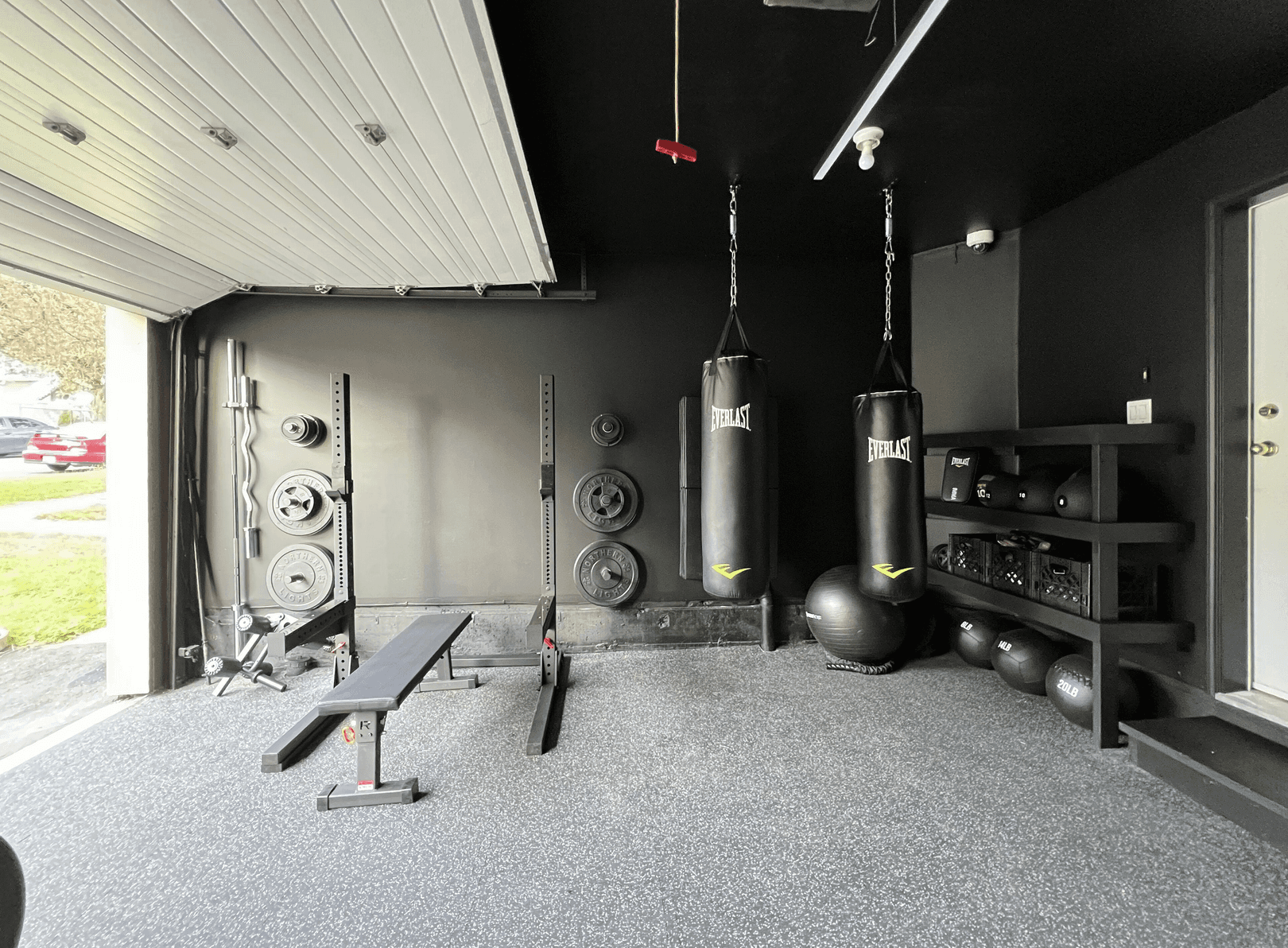
Rubber flooring is made from either recycled tires or virgin synthetic rubber and has become the gold standard for serious home gym builders. It offers excellent shock absorption and durability for high-impact training.
Rubber tiles and rolls hold up to dropping weights, heavy machines, and constant use without permanent compression or tearing. The non-porous surface resists staining and cleans easily with a simple sweep and mop.
Cost ranges from $1.85 to $3.50 per square foot for quality options, though virgin rubber and specialty finishes run higher (Canada Plastics, 2025). Professional installation adds $1.00 to $2.00 per square foot.
Foam Flooring: Budget-Friendly Comfort
EVA foam tiles offer an affordable entry point for home gym builders on a tight budget. Foam is softer and more comfortable underfoot than rubber, making it popular for bodyweight exercises, yoga, and pilates.
Foam typically costs $1 to $2 per square foot for basic tiles, with thicker, more durable versions reaching $3 to $6 per square foot (Flooring Inc., 2024). However, foam compresses under weight and rarely regains its original shape.
Foam works best for light-impact activities and temporary setups. If your training includes heavy weights or machines, plan to replace foam flooring sooner than other options.
Vinyl Flooring: Low-Maintenance Versatility
Vinyl planks and tiles combine durability with aesthetic appeal and are appreciated for easy maintenance. Vinyl is water-resistant, making it a solid choice for basements where moisture control matters.
Vinyl typically costs $2 to $4 per square foot for standard options and up to $8 per square foot for heavy-duty commercial grades. However, in cold conditions below 65 degrees Fahrenheit, vinyl becomes less flexible and more brittle, potentially cracking during installation or daily use (Titan Floors, 2024).
Artificial Turf: Sport-Specific Training
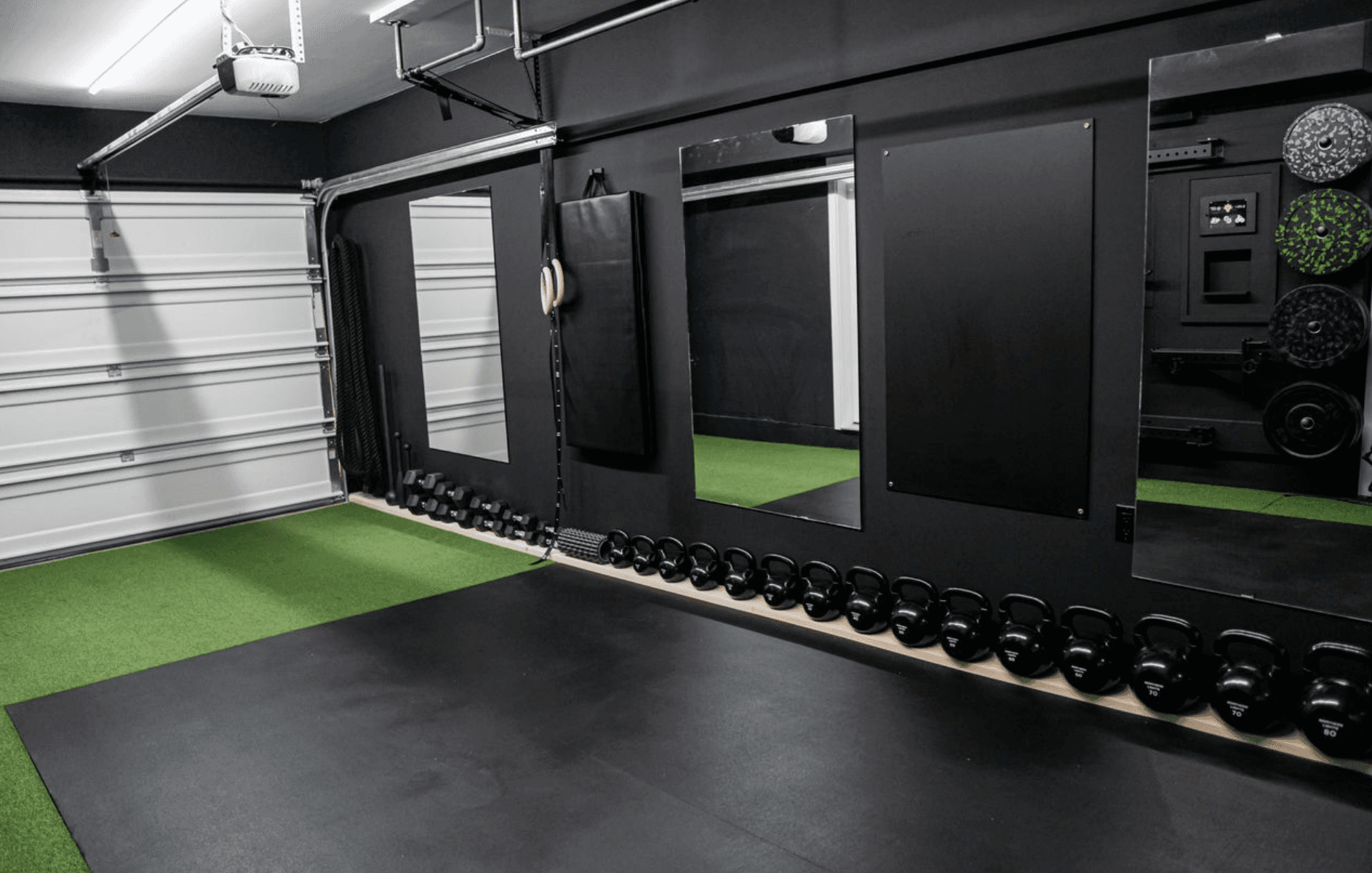
Foam-backed artificial gym turf is designed for athletes performing agility work, sprints, sled pushes, and sport-specific conditioning. The foam backing absorbs impact and reduces stress on knees and ankles.
Artificial turf excels for explosive movements and is perfect for off-ice hockey training, CrossFit, or functional fitness. For a traditional weightlifting or bodyweight home gym, artificial turf is unnecessary but invaluable if you are training for sport-specific performance.
Quick Comparison Table
Feature | Rubber | Foam | Vinyl | Artificial Turf |
|---|---|---|---|---|
Durability (high-impact) | Excellent | Poor | Good | Very Good |
Price per sq ft | $1.85-$3.50 | $1-$2 | $2-$8 | $3-$6 |
Lifespan | 8+ years | 1-3 years | 5-7 years | 8-10 years |
Moisture resistance | Good | Fair | Excellent | Good |
Comfort underfoot | Firm | Very soft | Medium | Medium-soft |
Best for | Weights/strength | Light exercise | General gym | Sport training |
Installation DIY | Easy | Very easy | Moderate | Moderate |
Canadian-Specific Flooring Challenges
Canada's climate and home construction present unique flooring demands that homeowners in warmer climates do not face. Your basement home gym needs flooring designed for our specific environment.
Basement Moisture: The Silent Threat
Canadian basements deal with moisture year-round. Concrete is naturally porous and absorbs water from the ground, especially during spring snowmelt and after heavy rain. If your flooring does not breathe or your subfloor lacks a vapor barrier, moisture gets trapped underneath, leading to mold, mildew, and premature flooring failure.
The ideal basement humidity range in Canada is 30 to 50 percent (Reno Duck, 2025). Before installing any flooring, address moisture at the source with proper drainage, gutters, and downspouts directed away from your foundation.
Underlayments and vapor barriers are critical for gym flooring in Canadian basements. Rubber tiles and vinyl with proper underlayment handle moisture better than foam, which absorbs water like a sponge.
Temperature Swings and Subfloor Movement
Canadian winters create temperature and humidity swings that cause concrete to expand and contract. Below 65 degrees Fahrenheit, vinyl becomes less flexible and more brittle, making it prone to cracking (Natural Resources Canada, 2025).
Rubber and foam handle temperature fluctuations better than vinyl, but all flooring benefits from a properly insulated and climate-controlled basement. Consistent indoor heating helps minimize the worst swings.
Concrete Preparation: The Foundation Matters
Your concrete subfloor must be properly prepared before any flooring goes down. The concrete needs to be clean, dry, and reasonably level.
Flooring should sit in the room where it will be installed for at least 48 to 72 hours so it can adjust to the ambient humidity (Floorest, 2025). This step prevents movement and gaps after installation.
Flooring Thickness: How Much Cushioning Do You Need?
The right thickness depends on your training style. Too thin and you get no protection; too thick and you lose stability for heavy lifts.
For Strength Training and Powerlifting
If you are lifting heavy weights, deadlifting, or doing Olympic lifts, use rubber flooring at least 1/2 inch thick. This thickness provides enough cushioning to reduce noise and protect your subfloor without compressing under heavy loads.
Interlocking rubber floor tiles typically range from $2 to $5 per square foot for 3/8 to 1/2 inch thickness (Flooring Inc., 2024).
For Cardio and Functional Fitness
Cardio machines and high-intensity training benefit from 3/4 inch to 1 inch of cushioning. Thicker flooring reduces the shock transmitted through machines to your joints and the floor underneath.
For Yoga, Pilates, and Bodyweight Work
Low-impact exercise does not require much cushioning. Even 7/16 inch to 1/2 inch of foam provides comfortable padding for stretching and floor exercises (Great Mats, 2025).
DIY Installation vs Professional Installation
Most home gym flooring can be installed without professional help, but whether you should depends on your skill level and space.
DIY Installation: Rubber and Foam
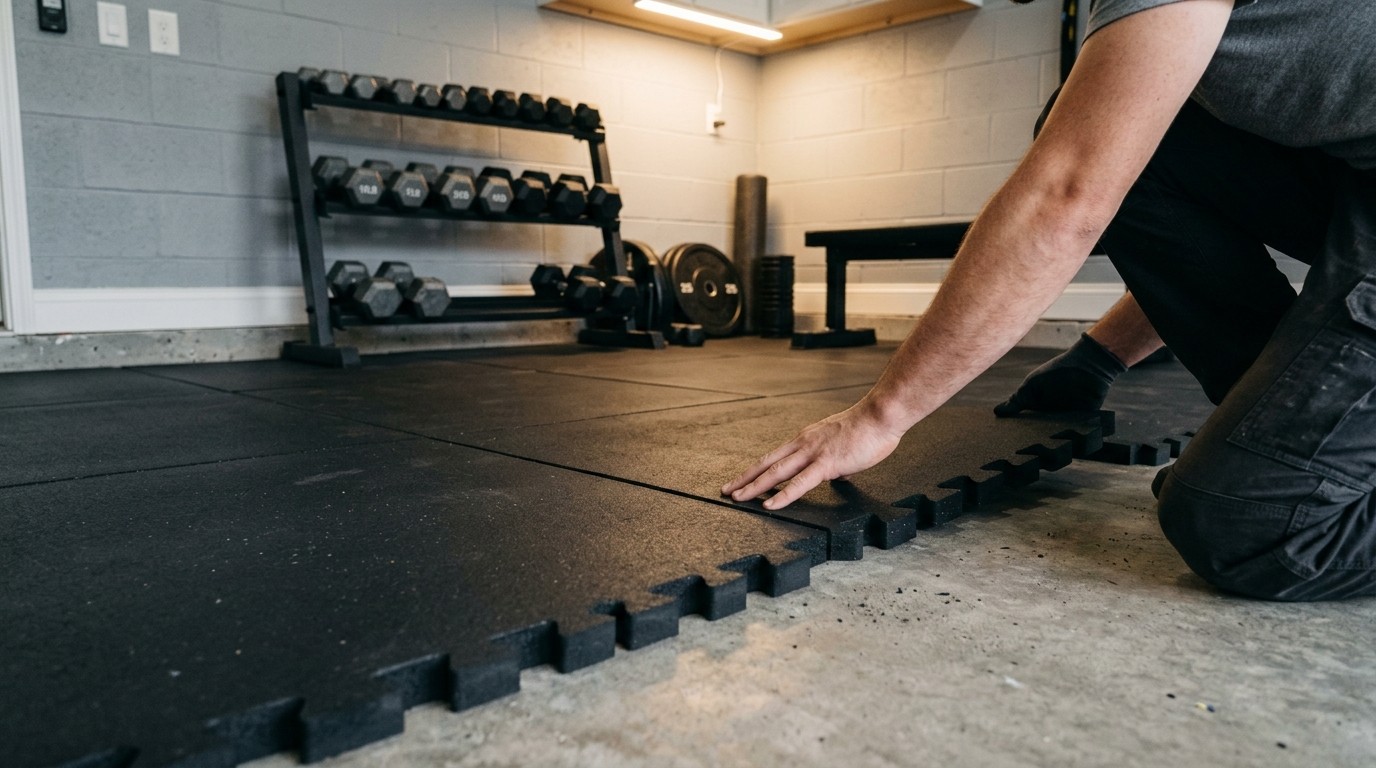
Interlocking rubber tiles and EVA foam tiles are designed for homeowners. You simply click them together and lay them on clean, dry concrete. No adhesive needed. Most people can install 100 square feet in a few hours.
Rubber rolls and adhesive-backed vinyl require more skill. If your space has complex corners or angled walls, professional installation pays for itself in durability and appearance.
Professional Installation: Worth It For Vinyl and Turf
Vinyl flooring and artificial turf are harder to install correctly, especially in basements with moisture concerns. Professional installation typically adds $1.00 to $2.00 per square foot (Canada Plastics, 2025).
For a 200 square foot gym, that is $200 to $400 extra for expert work.
Maintenance and Longevity
Different flooring types need different care to last.
Rubber Flooring Care
Sweep regularly to remove dirt and dust. Mop with mild soap and water. Rubber is non-porous and resists staining. Quality rubber flooring lasts 8 or more years with proper care.
Foam Flooring Care
Foam requires minimal maintenance but needs protection. Sweep regularly and wipe spills immediately so water does not soak in. Foam is vulnerable to tears and compression.
Vinyl Flooring Care
Vinyl is easy to maintain. Sweep or vacuum regularly and mop with mild soap and water. Vinyl can develop gaps if humidity fluctuates dramatically.
Artificial Turf Care
Vacuum regularly like regular carpet flooring. Brush the nap occasionally to keep it looking fresh. Turf requires no sealing or special maintenance. Lifespan is typically 8 to 10 years with moderate use.
Flooring Cost in Canada: Budget Planning
Total home gym flooring cost depends on your space size, material choice, and installation method.
For a typical 200 square foot basement gym:
Rubber tiles (3/8 inch): $370 to $700
EVA foam tiles (3/4 inch): $200 to $600
Vinyl planks (heavy-duty): $400 to $1,600
Artificial turf: $600 to $1,200
These are material costs only. A full 400 square foot space roughly doubles these numbers. Budget for concrete sealing or underlayment if your basement has moisture concerns. This adds $200 to $500 to your project.
Once your flooring is installed, design the rest of your home gym space. Check out our guide on home gym design ideas to plan your layout and equipment placement. If you are building in a basement, learn more with our article on basement gym ideas.
Think beyond just flooring when budgeting your project. Our guide on home gym cost in Canada breaks down all the expenses so you can plan properly. And do not forget about recovery. A dedicated recovery zone design with the right flooring complements your training perfectly.
Frequently Asked Questions
Which flooring is best for dropping heavy weights?
Rubber flooring is the clear winner. Use at least 3/8 inch thick interlocking rubber tiles or a rubber roll. Foam will compress and tear under dropped weights. Rubber absorbs the impact, reduces noise, and protects both your floor and equipment.
Can I use foam flooring if I lift weights?
Foam is not ideal for heavy lifting. While it works for light weights and bodyweight exercises, foam compresses under heavy loads and tears easily. If you plan heavy lifting, invest in rubber instead.
How do I prevent moisture problems under my gym flooring?
Address moisture at the source before installing flooring. Ensure gutters and downspouts direct water away from your foundation. Install a dehumidifier if needed to keep humidity between 30 and 50 percent. Install an underlayment or vapor barrier under your flooring.
Is vinyl flooring good for Canadian basements?
Vinyl works well in Canadian basements if installed correctly with proper underlayment and vapor barriers. However, vinyl becomes brittle in cold conditions below 65 degrees Fahrenheit. Install vinyl during warmer months and heat your basement during installation.
Can I install gym flooring over concrete without a subfloor?
Yes, gym flooring is designed to install directly over concrete. Ensure the concrete is clean, dry, and reasonably level. For moisture-prone basements, use an underlayment or vapor barrier between the concrete and your flooring.
How long does gym flooring last in Canada?
Rubber flooring lasts 8 or more years with proper care. Vinyl lasts 5 to 7 years depending on humidity control. Foam lasts 1 to 3 years with regular heavy use. Artificial turf lasts 8 to 10 years.
Key Takeaways
Rubber flooring is the best choice for strength training. It handles dropped weights, resists compression, and lasts 8 or more years. Cost is $1.85 to $3.50 per square foot.
Canadian basements need moisture barriers under flooring. Install underlayment or vapor barriers, control humidity between 30 and 50 percent, and ensure proper drainage before installing any flooring.
DIY installation works for interlocking tiles. Rubber and foam tiles click together easily, saving $200 to $800 on installation costs. Vinyl and artificial turf are better left to professionals.
Flooring thickness matters by training style. Use 3/8 to 1/2 inch rubber for strength training, 3/4 to 1 inch for cardio, and 1/2 inch or less for yoga and pilates.
Plan for replacement in your budget. Foam needs replacing every few years if used heavily. Rubber and vinyl last longer but cost more upfront. Calculate cost per year of use to compare true value.